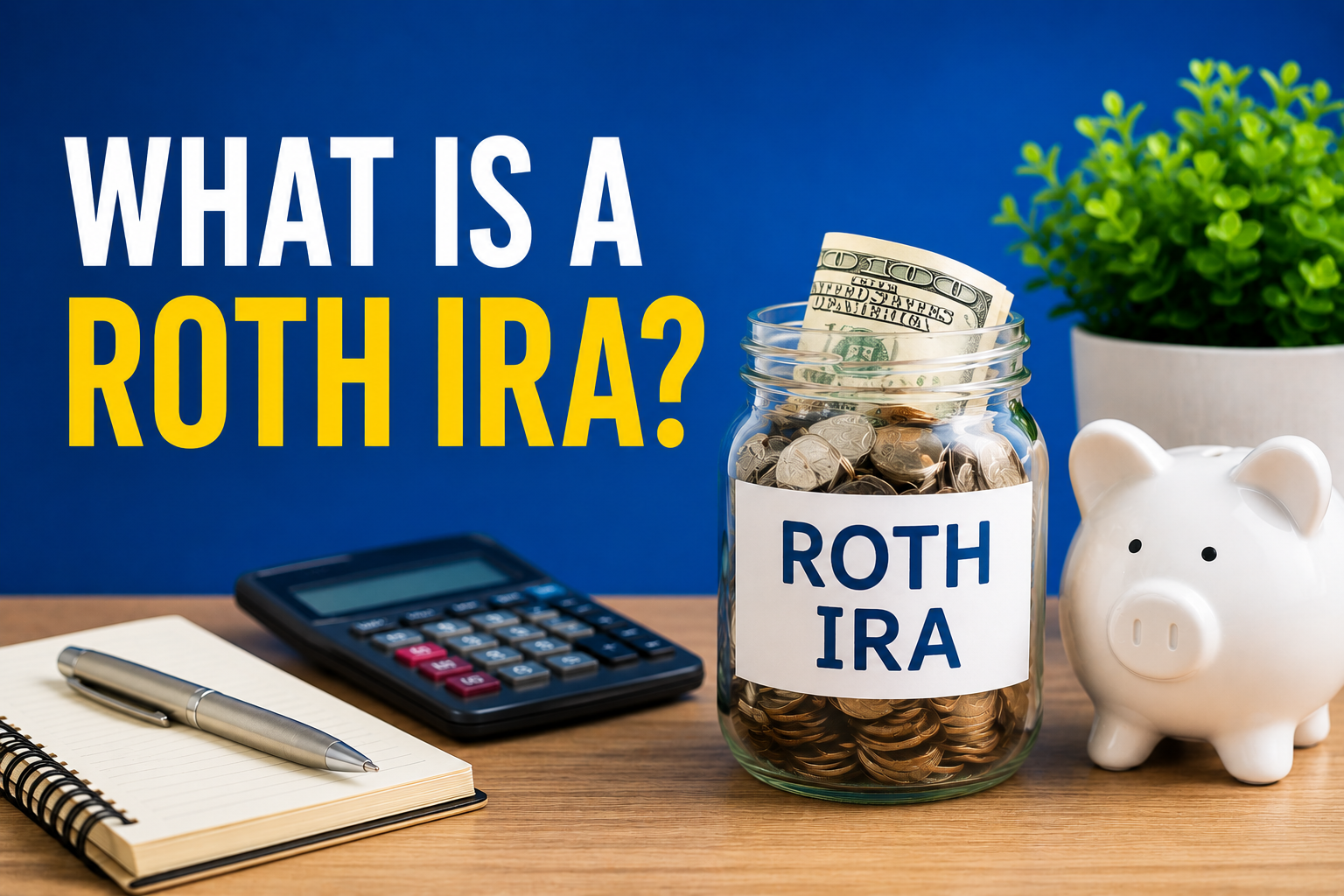
Saving for retirement may seem like something you can worry about later, but the earlier you start, the better. One of the most popular retirement savings accounts in the United States is the Roth IRA. It offers valuable tax benefits that can help your money grow over time.
If you've heard the term but aren't sure what it means, don't worry. This beginner's guide explains what a Roth IRA is, how it works, its benefits, and whether it might be the right choice for you.
What Is a Roth IRA?
A Roth IRA (Individual Retirement Account) is a retirement savings account that allows you to invest money after you've already paid income taxes on it.
The biggest advantage is that your investments can grow tax-free, and if you follow the rules, you can withdraw your money tax-free during retirement.
Unlike some retirement accounts, you don't receive a tax deduction for the money you contribute today. Instead, you enjoy the tax benefits later when you retire.
How Does a Roth IRA Work?
A Roth IRA is simple once you understand the basics.
Here's how it works:
You contribute money that has already been taxed.
Your money can be invested in assets such as stocks, bonds, mutual funds, ETFs, or other eligible investments.
Your investments have the opportunity to grow over time.
Qualified withdrawals during retirement are generally tax-free.
Because retirement can last many years, tax-free withdrawals can save you a significant amount of money in the future.
Who Can Open a Roth IRA?
Most people with earned income can open a Roth IRA, but eligibility depends on your income level and tax filing status.
Generally, you can contribute if:
You have earned income from a job or self-employment.
Your income falls within the IRS contribution limits.
Your earnings may affect your Roth IRA eligibility. The IRS updates these limits regularly.
Benefits of a Roth IRA
There are many reasons why people choose a Roth IRA for retirement savings.
1. Tax-Free Retirement Withdrawals
One of the biggest advantages is that qualified withdrawals are generally tax-free.
If your investments grow substantially over many years, you won't owe federal income tax on those qualified earnings when you withdraw them in retirement.
2. Tax-Free Investment Growth
Your investments can grow year after year without being taxed annually.
This allows your money to benefit from compound growth over the long term.
3. Flexible Withdrawals
Unlike investment earnings, you can generally withdraw your original contributions at any time without taxes or penalties because you've already paid taxes on that money.
However, different rules may apply to investment earnings, so it's important to understand the withdrawal requirements.
4. No Required Minimum Distributions (RMDs)
Unlike many traditional retirement accounts, Roth IRAs generally do not require you to take minimum withdrawals during your lifetime.
This gives you more flexibility in managing your retirement income.
5. Great for Younger Investors
Many younger workers choose a Roth IRA because they may currently be in a lower tax bracket.
Paying taxes now could be beneficial if they expect to be in a higher tax bracket later in life.
What Can You Invest In?
A Roth IRA is an account, not an investment itself.
Inside the account, you can choose from many types of investments, including:
Stocks
Bonds
Exchange-traded funds (ETFs)
Mutual funds
Index funds
Certificates of deposit (CDs)
Your investment choices will depend on your financial goals, risk tolerance, and retirement timeline.
Roth IRA vs. Traditional IRA
Although both accounts help you save for retirement, they work differently.
Roth IRA
Contributions are made with after-tax money.
Qualified withdrawals are generally tax-free.
No required withdrawals while you’re alive.
Traditional IRA
Contributions may be tax-deductible if you qualify.
Retirement withdrawals are usually taxable.
Required minimum distributions usually apply starting at the applicable IRS age.
Choosing between the two depends on your income, tax situation, and long-term financial goals.
Things to Keep in Mind
While a Roth IRA has many advantages, there are a few important rules.
Annual contribution limits apply.
Income limits may affect eligibility.
Qualified withdrawals generally require meeting certain age and holding-period rules.
Investment values can go up or down depending on market performance.
Understanding these rules before opening an account can help you avoid unexpected taxes or penalties.
Is a Roth IRA a Good Choice for You?
A Roth IRA can be a smart option if you:
Want tax-free income during retirement.
Are just beginning to save for retirement.
Expect your income to increase in the future.
Plan to invest for many years.
Want flexibility with your retirement savings.
Everyone's financial situation is different, so it's worth comparing your options before making a decision.
Tips for Getting Started
If you're thinking about opening a Roth IRA, here are a few simple tips:
Start saving as early as possible.
Contribute regularly, even if it's a small amount.
Choose investments that fit your financial goals.
Avoid investing all your money in one place.
Review your portfolio from time to time and make adjustments when appropriate.
The most important step is getting started. Even small contributions can grow significantly over several decades thanks to compound growth.
Final Thoughts
A Roth IRA is one of the most powerful retirement savings tools available for many investors. While you pay taxes on your contributions today, the opportunity for tax-free growth and tax-free qualified withdrawals can make a big difference over the long term.
If you're looking for a simple way to build your retirement savings, a Roth IRA is worth considering. Starting early, contributing consistently, and investing wisely can help you build a strongerfinancial future over time.


No comments yet.