
Managing your money doesn't have to be difficult. If you've ever wondered where your paycheck disappears each month, the 50/30/20 budget rule can help you take control of your finances without making budgeting feel overwhelming.
This simple budgeting method divides your income into three categories: needs, wants, and savings. It's easy to understand, flexible enough for most lifestyles, and a great starting point if you're new to budgeting.
In this guide, you'll learn what the 50/30/20 budget rule is, how it works, its benefits, and whether it's the right budgeting method for you.
What Is the 50/30/20 Budget Rule?
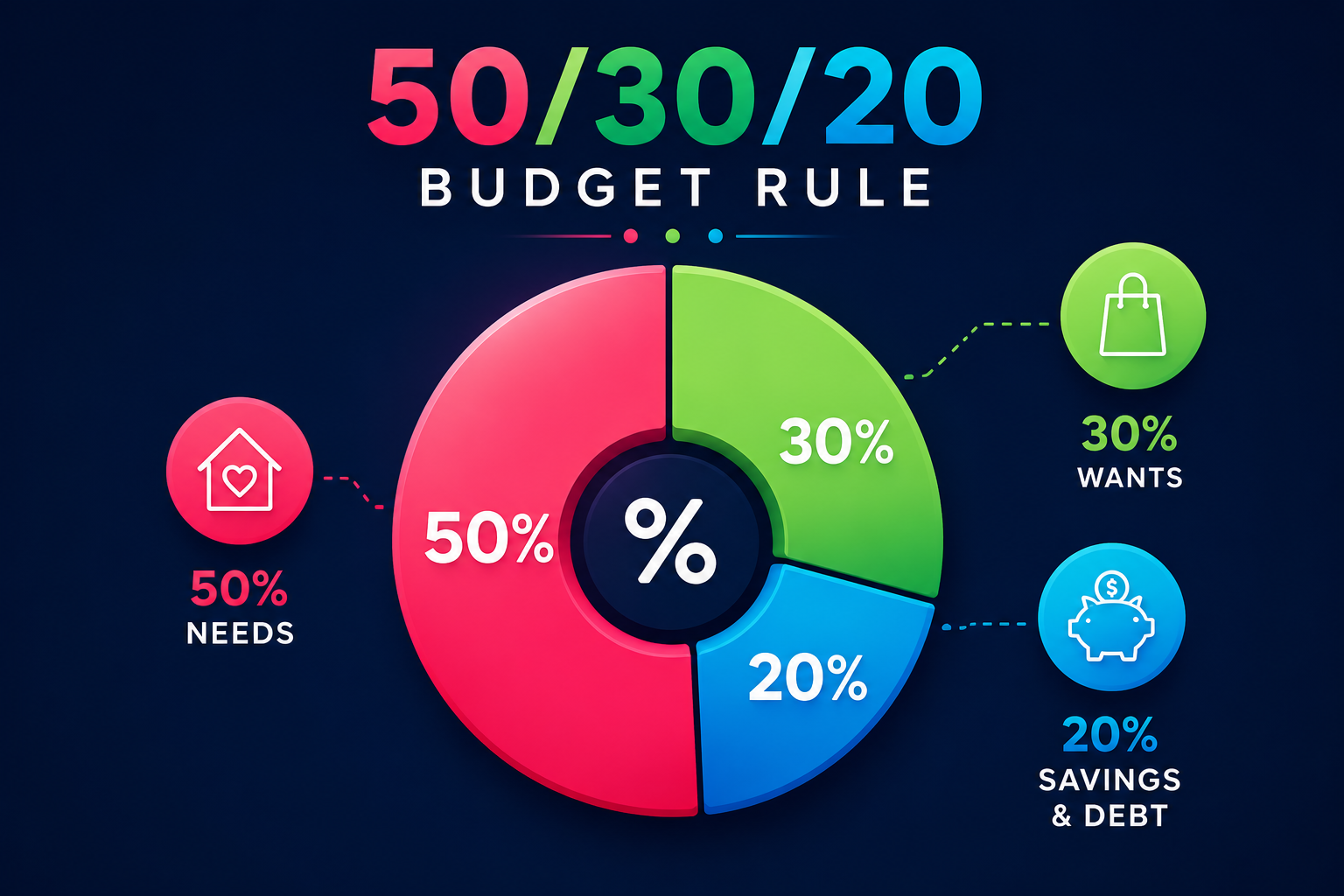
The 50/30/20 budget rule is a budgeting strategy that helps you divide your after-tax income into three main categories:
50% for Needs
30% for Wants
20% for Savings and Debt Repayment
The idea is to make sure you're covering your essential expenses while still enjoying life and building a secure financial future.
Instead of tracking every single dollar you spend, this method gives you a simple framework that's easy to follow.
How the 50/30/20 Budget Rule Works
For example, imagine your monthly take-home income is $3,000.
Here's how your budget would look:
50% for Needs ($1,500)
Needs are the expenses you must pay to live and work.
Examples include:
Rent or mortgage
- Utility bills
- Groceries
- Health insurance
- Transportation
- Minimum loan payments
- Childcare
If you stopped paying these bills, your daily life would be affected.
30% for Wants ($900)
This category covers the things you like to spend money on after your essential needs are met.
Examples include:
Dining out
Streaming subscriptions
Shopping
Vacations
Entertainment
Hobbies
Gym memberships
There's nothing wrong with spending money on things you enjoy, as long as you stay within your budget.
20% for Savings and Debt ($600)
This part of your income helps build your financial future.
You can use it for:
Emergency savings
Retirement accounts
Investing
Paying extra toward credit card debt
Saving for a house
Building an education fund
If you already have enough savings, you can invest this money to help it grow over time.
The Advantages of the 50/30/20 Budget Rule
One reason this budgeting method is so popular is because it's simple.
You don't need complicated spreadsheets or expensive budgeting apps to get started.
Some of the biggest benefits include:
Easy to understand
Helps prevent overspending
Encourages regular saving
Creates a healthy balance between spending and saving
Flexible enough for different income levels
Many people find it less stressful than tracking every purchase.
Does the 50/30/20 Budget Rule Work for Everyone?”
Not always.
While it's an excellent starting point, everyone's financial situation is different.
For example:
If you live in an expensive city, your housing costs may take more than 50% of your income.
If you're paying off large debts, you may choose to put more than 20% toward debt repayment.
If your income changes from month to month, you'll need to adjust your budget regularly.
The important thing is to use the rule as a guide rather than a strict requirement.
Tips for Following the 50/30/20 Budget Rule
If you want this budgeting method to work, consider these simple tips:
Track Your Spending
Before creating a budget, look at your bank statements to see where your money currently goes.
Cut Back on Unnecessary Expenses
Small changes can make a big difference.
For example, reducing takeout meals or canceling unused subscriptions can free up extra money for savings.
Build an Emergency Fund
Unexpected expenses happen.
Having emergency savings can help you avoid borrowing money when life throws you a surprise.
Review Your Budget Every Month
Your expenses and income may change over time.
Checking your budget each month helps you stay on track.
Common Mistakes to Avoid
Here are a few mistakes many beginners make:
Ignoring small daily purchases
Forgetting about annual bills
Spending savings on unnecessary items
Giving up after one bad month
Not adjusting the budget when income changes
A successful budget isn’t about perfection—it’s about building better money habits over time.
Can You Change the Percentages?
Yes.
Think of the 50/30/20 rule as a helpful framework rather than something you must follow exactly.
If you're working toward a major financial goal, you might use:
60% Needs
20% Wants
20% Savings
Or even:
- 50% Needs
- 20% Wants
- 30% Savings
The best budget is the one you can stick with consistently.
Final Thoughts
The 50/30/20 budget rule is one of the easiest ways to start managing your money. By dividing your income into needs, wants, and savings, you can create a healthier balance between enjoying today and preparing for tomorrow.
You don't have to follow the percentages perfectly every month. What matters most is building good money habits that help you spend wisely, save consistently, and reach your financial goals over time.
If you're just starting your budgeting journey, the 50/30/20 rule is a simple and practical place to begin.



No comments yet.