
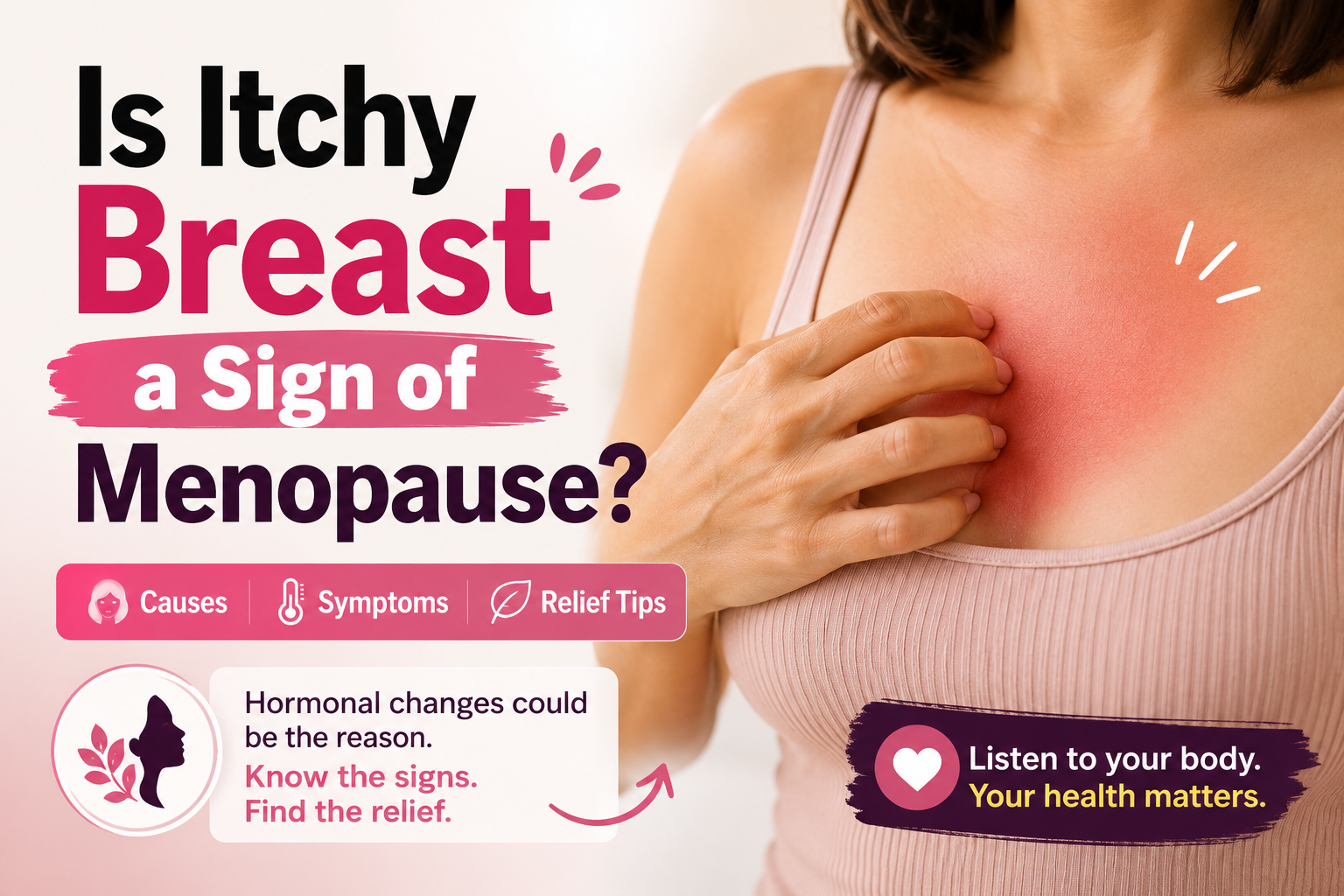
Menopause brings a lot of changes—some expected, some confusing, and some that women rarely talk about openly. One of those lesser-discussed symptoms is itchy breasts during menopause. It can feel uncomfortable, distracting, and sometimes even worrying, especially when you’re not sure why it’s happening.
If you’ve noticed itching, tingling, dryness, or sensitivity in your breasts during perimenopause or menopause, you are not alone. This is a common experience, and in most cases, it is linked to natural hormonal changes in the body rather than anything serious.
In this guide, we’ll break it all down in a simple, human way—what causes it, what it feels like, how to get relief, and when to seek medical advice.
Understanding Menopause and Skin Changes
Menopause is the natural stage in a woman’s life when menstrual cycles stop permanently, usually between ages 45 and 55. During this transition, the body produces less estrogen and progesterone, two key hormones that affect many systems—including the skin.
Estrogen helps keep the skin:
• Moist
• Elastic
• Thick and healthy
• Well-nourished through good blood flow
When estrogen levels drop, the skin often becomes:
• Dry
• Thinner
• More sensitive
• Easily irritated
This is why many women experience itchy skin during menopause, and the breasts are no exception.
Why Are My Breasts Itchy During Menopause?
Itchy breasts during menopause can happen for several reasons. Most of them are harmless, but they can still be uncomfortable.
1. Hormonal Changes (The Main Cause)
The biggest reason is fluctuating estrogen levels. When estrogen decreases:
• Skin loses moisture faster
• Natural oils reduce
• Nerve endings become more sensitive
This leads to itching, tingling, or a crawling sensation on or around the breasts.
2. Dry Skin
Aging causes the skin to produce fewer natural oils. Combined with menopause, this dryness becomes more noticeable.
Dry skin on the breasts may feel:
• Tight
• Flaky
• Rough
• Itchy, especially after bathing
Hot showers, harsh soaps, or strong detergents can make it worse.
3. Breast Tissue Changes
During perimenopause and menopause, breast tissue changes in size and density. Fat replaces glandular tissue, which can lead to:
• Sensitivity
• Mild discomfort
• Occasional itching or tenderness
This is a natural and expected part of getting older.
4. Skin Irritation or Allergies
Sometimes the cause has nothing to do with hormones. It could be:
• New laundry detergent
• Perfumed body lotions
• Tight or synthetic bras
• Sweat and heat irritation
The skin on and around the breasts is delicate, so even small irritants can trigger itching.
5. Reduced Collagen Production
Estrogen helps maintain collagen, which keeps skin firm and smooth. As collagen declines:
• Skin becomes thinner
• It loses elasticity
• It becomes more prone to irritation
This can contribute to itching sensations.
6. Hot Flashes and Sweating
Hot flashes are common during menopause. They can cause:
• Sudden heat in the chest and breast area
• Sweating under clothing or bras
• Skin irritation from trapped moisture
Sweat combined with friction often leads to itching.
7. Skin Conditions (Eczema or Dermatitis)
Menopause can worsen existing skin conditions or trigger new ones like:
• Eczema
• Contact dermatitis
• Psoriasis
These conditions can cause persistent itching, redness, and sometimes rash.
What Itchy Breasts Feel Like During Menopause
Every woman experiences it differently, but common descriptions include:
• A constant light itch under the skin
• Sudden “prickly” sensations
• Dry, tight feeling on the breast surface
• Itching that worsens at night
• Mild burning or tingling
In most cases, it is not painful—but it can be irritating enough to affect sleep or comfort.
Is It Normal or Something Serious?
In most cases, itchy breasts during menopause are completely normal and linked to hormonal changes or dry skin.
However, it’s important to pay attention to your body. Occasionally, itching can be a sign of something that needs medical attention.
When You Should See a Doctor
You should consider seeing a healthcare professional if you notice:
• Persistent itching that doesn’t improve
• A visible rash that spreads or worsens
• Thickened or scaly skin on the breast
• Nipple discharge
• Breast lumps or unusual swelling
• One-sided itching that is unusual for you
Most of the time, the cause is still harmless—but it’s always better to check when something feels different.
How to Relieve Itchy Breasts During Menopause
The good news is that there are many simple ways to manage and reduce the itching.
1. Moisturize Daily
One of the most effective solutions is keeping the skin hydrated.
Use:
• Fragrance-free moisturizers
• Aloe vera gel
• Shea butter
• Coconut oil (if your skin tolerates it)
Use it immediately after bathing when the skin hasn’t fully dried.
2. Switch to Gentle Soaps
Avoid harsh soaps and body washes that strip natural oils.
Look for:
• Mild, fragrance-free cleansers
• Moisturizing body washes
• Soap-free options for sensitive skin
3. Wear Comfortable Bras
Your choice of bra matters more than you think.
Choose:
• Cotton bras
• Breathable fabrics
• Proper fitting (not too tight)
• Avoid underwire if it causes irritation
4. Avoid Heat and Sweat Trapping
Try to:
• Stay cool in hot weather
• Wear loose clothing at home
• Change out of sweaty clothes quickly
• Use breathable fabrics like cotton
5. Use Cool Compresses
A cool cloth placed on the breasts can:
• Reduce itching
• Calm irritation
• Soothe hot, sensitive skin
6. Avoid Scratching
Scratching may give temporary relief but can:
• Damage skin
• Increase irritation
• Lead to infection
Instead, gently tap or press the area if it itches.
7. Consider Anti-Itch Creams
Over-the-counter creams containing:
• Hydrocortisone (mild)
• Calamine lotion
• Anti-itch moisturizers
can help, but should be usedsparingly and not forlong periodswithout advice.
8. Stay Hydrated
Drinking enough water helps:
• Maintain skin moisture
• Improve skin elasticity
• Reduce dryness over time
9. Eat Skin-Friendly Foods
Foods rich in:
• Omega-3 fatty acids (fish, flaxseed)
• Vitamin E (nuts, seeds)
• Antioxidants (fruits and vegetables)
can support healthier skin.
Natural Remedies That May Help
Some women prefer gentle natural approaches. While results vary, these may help:
Aloe Vera
Cooling and soothing for irritated skin.
Oatmeal Baths
Helps reduce inflammation and itching.
Coconut Oil
Locks in moisture and softens dry skin.
Chamomile Compress
Has calming properties for sensitive skin.
Emotional Side of Menopause Symptoms
It’s important to acknowledge something often ignored: menopause symptoms can be emotionally frustrating.
Even though itchy breasts may seem like a small issue, dealing with ongoing discomfort can affect:
• Sleep quality
• Confidence
• Daily comfort
• Emotional well-being
Understanding that this is a normal part of a natural life stage can help reduce anxiety around the symptom.
Can Itchy Breasts Be Prevented?
You may not be able to fully prevent hormonal changes, but you can reduce symptoms by:
• Keeping skin moisturized daily
• Avoiding irritants
• Wearing breathable clothing
• Managing hot flashes
• Maintaining a healthy lifestyle
Consistency matters more than anything else.
Common Myths About Itchy Breasts in Menopause
Myth 1: It means breast cancer
Most itching is NOT related to cancer. Cancer symptoms usually include lumps or structural changes, not just itching.
Myth 2: It will go away immediately after menopause starts
Symptoms may continue for months or years as hormone levels stabilize.
Myth 3: You should ignore it completely
While usually harmless, persistent or unusual symptoms should still be checked.
Frequently Asked Questions
Is itchy breast skin a sign of menopause?
Yes, it can be. Hormonal changes often lead to dry and itchy skin, including the breast area.
Why does itching get worse at night?
Skin tends to lose more moisture at night, and distractions are fewer, so you notice the itch more.
Can menopause cause breast pain and itching together?
Yes. Hormonal fluctuations can cause both sensitivity and itching.
Should I worry if only one breast itches?
Not always, but if it persists or is unusual for you, it’s best to get it checked.
Final Thoughts
Itchy breasts during menopause can be uncomfortable, but in most cases, it is simply your body adjusting to hormonal changes. Dry skin, reduced estrogen, and increased sensitivity all play a role.
The good news is that this symptom is manageable. With proper skincare, lifestyle adjustments, and awareness of your body, you can reduce discomfort and feel more in control.
However, always listen to your body. If something feels unusual or persistent, seeking medical advice is the safest choice.
Menopause is a natural transition—not a problem to fix, but a phase to understand and support your body through.
No comments yet.